I wanted to talk a little bit about the different meanings of fables as they are related by Sallustius in his On the Gods and the World.
In the text Sallust describes the meaning behind some of the maxims inscribed at the temple at delphi, where apollo would speak through his pythia on matters of particular interest to the lives of the men of the day
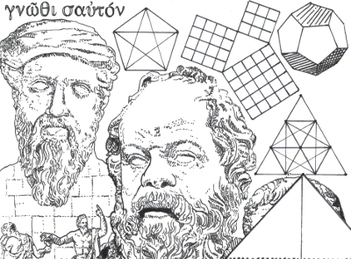
- Know Thyself and Nothing in Excess
By this was meant that one should both understand their inner life and operation,
but also to know their place in the great cosmic chain of being.
greek legendry is full of these sorts of cautionary tales where through great immoderation people receive great punishment, such as the stories of tantalus or sisyphus
And it’s exactly this that sallust was elaborating on In the Gods and the World.
He wanted to talk about the nature of Deity, and in particular about how the Gods could have qualities that were less than admirable.
The conclusion he arrives at is that the fables are meant to be considered as parables, as multiple orders of intersecting meaning.
Let me give an example of the sort of fable that is said to relate these distinct classes of meaning.
In the story of Adonis, the most beautiful of mortals, the mother of the Gods saw him sitting by the river Gallus and fell in love with him, where she placed upon him a starry hat, and mingled with him for all his wants.
But Adonis being drawn like a magnet by lust of his own fell in love with a Nymph. In order that he should not descend to depths of too deep a depravity the mother of the gods turned his mind and had him castrate his own genitals, whereby the union between the Mother of the Gods and the Adonis was restored.
So what can we say about this story? Firstly, it is said not to be a tragedy but a beautiful and vivific story. Greek myth has a long history of castration as detachment from generation, or a shift from begotten to unbegotten things.
We can remember how the Fathers of the Gods were usurped by their sons through castration, Cronos castrating his father Sky with a sickle while still in his mothers womb, during a particularly unpleasant act of copulation. Aphrodite or lust itself was thus formed when his genitals were cast into the sea.