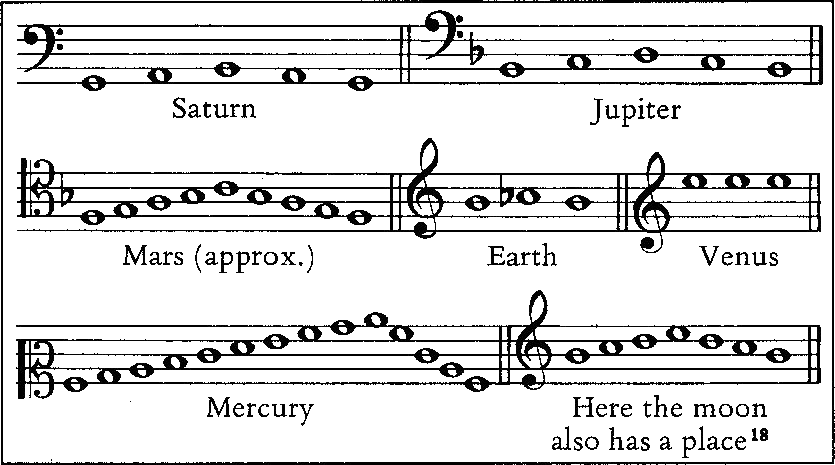
 Prelude, from Paul Hindemith’s Die Harmonie der Welt (Harmony of the World)
How can we see what cannot be seen? How can we know what we do not know?
The Pythagoreans believed we could come into direct knowledge of the unknown through the contemplation of the numbers through their figures and their weddings. They believed that everything was part of one great equation that the harmonies of number rang out eternal in ourselves and in the world around us.
Plato no stranger to Pythagorean philosophy remarks in the 7th book of his Republic:
One may come to understand the nature of numbers … for facility in the energies of the soul itself and its conversion from generation to truth and essence.
In our lives things can be remembered and forgotten they can be lost and found given or taken away. We lose our keys the way we lose our minds constantly coming in and out of view like dancers in the dark.
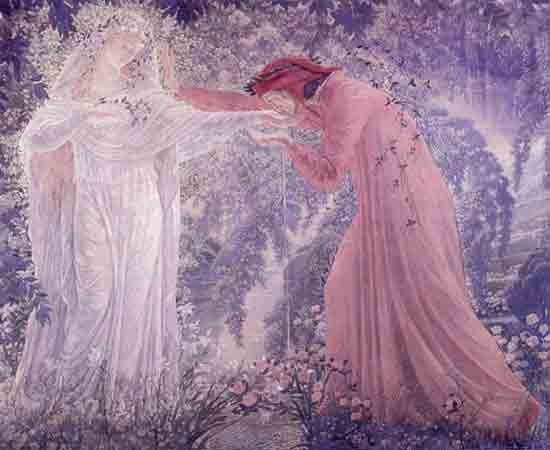 Dante, drinking from the river
Goethe, in his Faust remembered well that we have a twin nature of spirit and substance:
Two souls alas! are housed within my breast
Which struggle there for undivided reign:
One to the world with obstinate desire
And closely-cleaving organs still adheres:
Above the mist the other doth aspire
With sacred vehemence to purer spheres.
We say that an idea forms like an eidolon, the specter and image of the thing in itself. So why are we so afraid of ghosts, the gusts, spirits wandering in the air? Like the greek pneuma or the fire of heaven. For those we make are our children born from ourselves, condensing like dew drops, like Psyche drawn into Demeter’s somber night. Just as we are the images of our creators dim reflections of our holy ghost.
And what of our knowledge and of ourselves? We remember and we forget.
The poet Homer recalled the way that divine bees spun our souls into flesh and bone drawing us from two rivers: Lethe and Mnemosyne, with one to the north and one to the south*; one for the dying and one for the deathless. * For the northern winds are cold and bring winter and dying, but the southern winds are warm and bring summer and life.
In the 13th book of the Odyssey
The busy bees within the urns secure
Honey delicious and like nectar pure.
Perpetual waters through the grotto glide
A lofty gate unfolds on either side
We translate mathematics as the art of learning but more properly it should be known as the art of remembering. For the square is there before we draw it in the sand and will be there long after it is blown to dust. The doctrine of anamnesis so often recited by our most divine Plato is essential to Pythagorean thought. Socrates phrases the problem of meaning directly to Meno asking: What is justice? This question like our most famous gorgon Medusa paralyzes those who entertain it.
In his famous paradox Meno inquires how he can find something without being able to identify it. Were it right in front of him he’s afraid he could not see it. In response socrates turns to geometry, mathematics, and learning. He teaches one without formal education how to double the square using only basic means of doubling and halving. We can clearly see that we do not understand such things until we have learned them. We could not identify them if they were right in front of us but somehow we are granted vision through the act of learning.
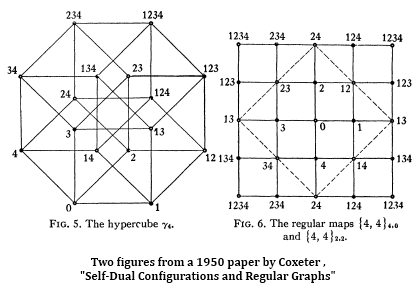
Socrates' solution to Meno’s paradox is no accidental turn of dialogue but is the heart of the Pythagorean doctrine. The numbers are prior to generation and never pass through the cradle nor grave. No number was ever turned to be anything but itself and the numbers like the gods are never seen to die or to be corrupted.
In the following series we will take an account of The Fall of Arithmetic into Geometry and will try to understand our own deeply complex relationship with numbers and mathematics.
We will find that numbers can be used as tools for reasoning and for meditation. They can be used as objects of worship as characters in a story or as sigils and curses. Numbers can be used to trap us in prisons of our own thoughts or to turn our souls toward the things most divine.
I want to leave you with this fair warning from the poet Alexander Pope and his Essay on Criticism:
A little learning is a dangerous thing
Drink deep or taste not the Pierian spring:
There shallow draughts intoxicate the brain
And drinking largely sobers us again
I hope that we can drink sufficiently deep and that these ideas flower like blossoms in our minds.